
The Operation UMI Symposium 2026 in Hakodate was held on October 10, 2026, at Premier Hotel Cabin President Hakodate as part of Hokkaido University’s 150th anniversary celebrations.
Operation UMI is a collaborative initiative of Hokkaido University, the University of Hawaiʻi at Mānoa, and the Okinawa Institute of Science and Technology that advances education and research in oceanography. The symposium welcomed 85 in-person participants and 69 online registrants.
Organized by the Uehiro Laboratory for Oceanography (ULO) at the Faculty of Fisheries Sciences, Hokkaido University, the symposium brought together researchers from Hokkaido University, the University of Hawaiʻi, the Okinawa Institute of Science and Technology (OIST), and the Hakodate Fisheries Research Institute. The aim was to share the latest research findings and foster a deeper understanding of how global warming is affecting the marine environment and marine ecosystems.
The presentations explored a broad range of topics. From the Uehiro Laboratory for Oceanography, Professor Daiki Nomura and Project assistant professor Mayuko Otsuki presented the effects of snow and ice melt on biogeochemical cycles in polar oceans, and marine ecosystems in Greenland and their importance to Indigenous livelihoods, respectively. Other talks examined the thermodynamics of typhoons making landfall, interactions between extreme weather events in Hokkaido and ocean variability, the relationship between North Pacific marine heatwaves and the red tide, the impacts of climate change on commercially important marine species in Hawaiʻi, the relationship between water temperature and salmonid growth, and the development of kelp aquaculture techniques adapted to changing marine conditions in southern Hokkaido.
Together, these studies highlighted the far-reaching effects of global warming, which extend beyond rising sea temperatures to include atmosphere–ocean interactions, extreme weather and marine events, changes in the distribution and physiology of marine organisms, and impacts on fisheries and aquaculture. In particular, research on the 2021 red tide event off eastern Hokkaido and on kelp aquaculture in southern Hokkaido underscored the direct consequences of marine environmental change for the region’s fisheries industry and the need for research and adaptation strategies tailored to local conditions.
The symposium concluded with a panel discussion featuring Hakodate Mayor Jun Oizumi, Director of the Hakodate Fisheries Research Institute Yohei Shimizu, Hokkaido University President Kiyohiro Houkin, and Yasuzumi Fujimori, Dean of the Faculty of Fisheries Sciences at Hokkaido University. The discussion focused on how scientific findings can be shared with local communities and translated into effective policies and practices to protect the marine environment and ensure the sustainable use of fisheries resources. The panelists exchanged valuable perspectives on how research on climate change and its impacts can inform public policy and industry, and on the role universities and researchers should play in sustaining the fisheries industry as global warming continues.
The symposium provided an important opportunity to bring international research perspectives into dialogue with local challenges in Hokkaido and to examine changes in the marine environment from a range of scientific viewpoints. Continued collaboration among universities and research institutions, together with stronger engagement with local communities, will be essential to advancing climate change adaptation, supporting a sustainable fisheries industry, and inspiring the next generation to take an interest in marine science.
Prepared by Akihide Kasai
Chair of Uehiro Laboratory for Oceanography
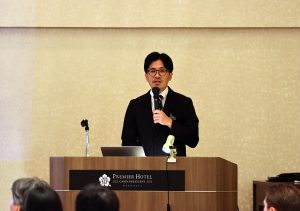
Lecture scene (Prof. Daiki Nomura, ULO)
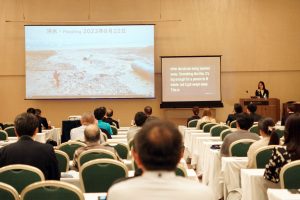
Lecture scene (Proj. Assist. Prof. Mayuko Otsuki, ULO)
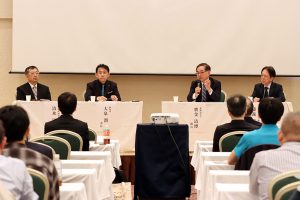
Panel discussion
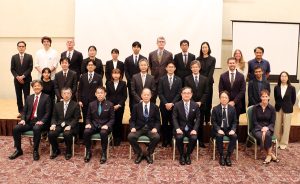
Symposium Group Photo
©Copyright ulo.fish.houdai.ac.jp All Right Reserved.